
research@nzerc.com

Stay informed with expert-backed insights on contact lens care, cleaning systems, and eye health. Our blog brings together research-driven guides, product comparisons, and practical tips to help you choose the right solutions and maintain safe, comfortable vision every day.

A 12-month Shanghai trial found less eye growth with an ortho-k lens designed for a smaller treatment zone than with a standard design. Both arms wore ortho-k, and several design issues limit the conclusions.
Read MoreA two-year Polish randomised trial found less eye growth with DIMS spectacle lenses than with 0.01% atropine, mostly in younger children and in year 1. We look at what the design can and can't tell us.
Read MoreA Czech placebo-controlled trial found 0.02% and 0.04% atropine both slowed eye growth over 12 months. Why "no significant difference" between doses is not the same as equivalence.
Read More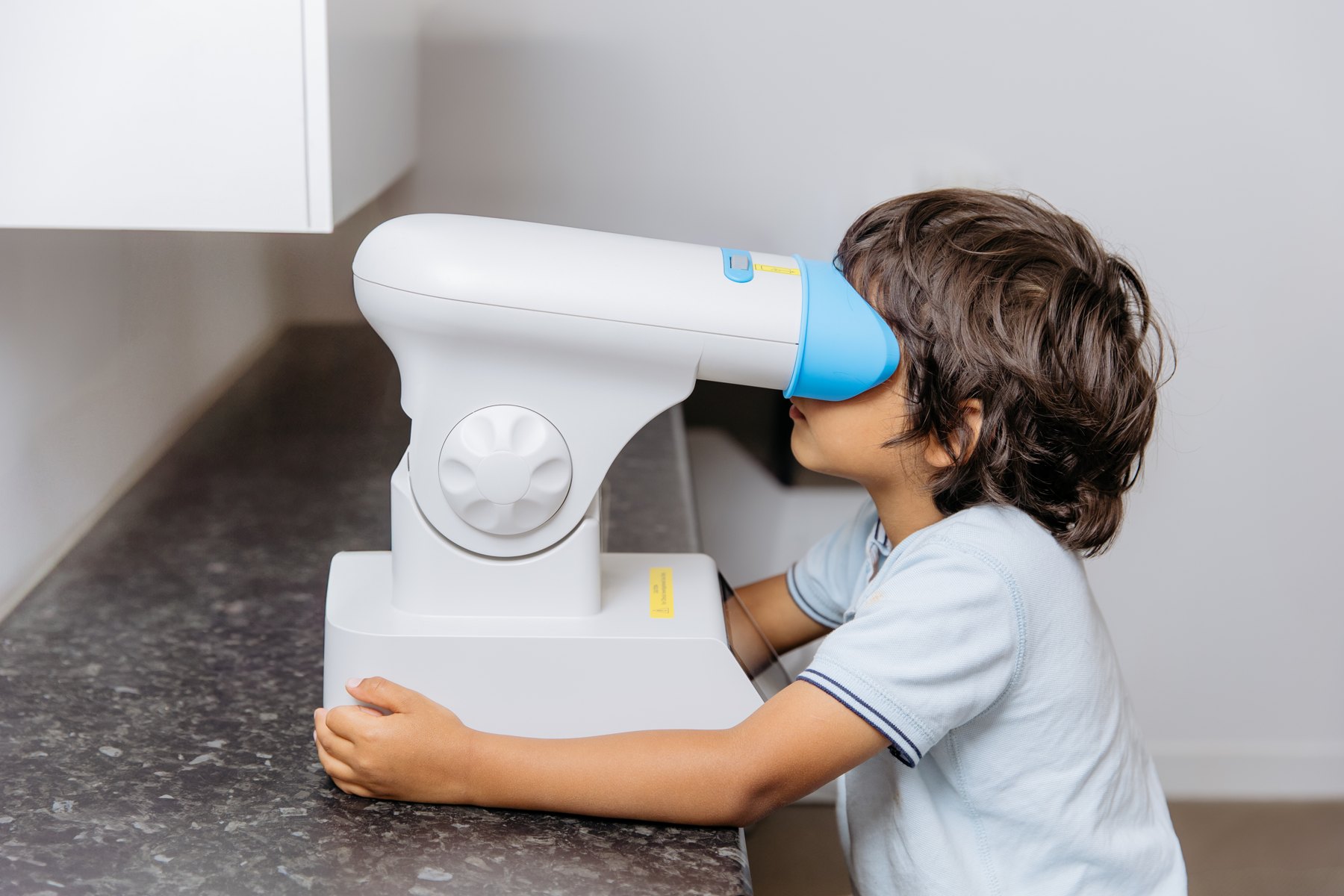
A Melbourne pilot trial of 34 children found red-light therapy was associated with less axial elongation than spectacles alone over 12 months. It is small, unmasked to families, device-company funded and cannot settle retinal safety.
Read MoreA one-year randomised trial added 0.01% atropine every second night for children still progressing quickly in ortho-k lenses. Eye growth was slower, but the study was unmasked, had no placebo drop, and the benefit faded over time.
Read More
A Beijing study moved children to 0.02% or 0.04% atropine if they progressed on 0.01%. With no control arm, regression to the mean and natural slowing with age can mimic a treatment effect.
Read More
A 2026 meta-analysis of 33 placebo-controlled trials suggests the refraction benefit of atropine for childhood myopia flattens as concentration rises, while side effects increase with dose. We look at what the abstract shows and what it leaves out.
Read MoreMyopia
Abiliti 1-Day is the first daily silicone hydrogel myopia-control soft lens and is now fitted in New Zealand. We separate the peer-reviewed six-month randomised trial from the manufacturer's two- and three-year claims, compare it with MiSight's three-year RCT, and explain what we measure in Hamilton to know whether it is working.
Read MoreA 2026 Bayesian network meta-analysis of 117 RCTs compared on-treatment efficacy with rebound 12 months after stopping. Low-dose atropine held its benefit; higher-dose atropine and red-light showed clinically meaningful rebound. Abstract-only, industry-authored.
Read MoreA 134-trial systematic review asked whether the detail of a conflict-of-interest statement predicts a myopia-control trial's quality or conclusions. We read the abstract and explain what the findings do and do not show.
Read MoreA Danish randomised trial compared DIMS myopia-control spectacles with orthokeratology over 18 months. We explain the 0.13 mm non-inferiority margin, the corneal-thickness adjustment, and what the result does and does not show.
Read MoreThe first US randomised trial of highly aspherical lenslet (HAL) spectacles reported 0.64 D and 0.24 mm less myopia progression than single-vision lenses over 24 months. We examine the numbers, the sponsor authorship and the interim design.
Read MoreClinical Trials
How and when to refer a patient for a research study at NZERC, what we will and will not do with your patient, and what you get back.
Read MoreClinical Trials
The starting point for sponsors, participants and referring clinicians: what NZERC does, which therapeutic areas it covers, and where to go next.
Read MoreKeratoconus
For lens manufacturers and corneal device sponsors: the imaging endpoints, fitting expertise and patient population NZERC brings to keratoconus and specialty lens studies.
Read MoreDry Eye
What NZERC offers sponsors of dry eye and MGD studies: the sign and symptom endpoints we measure, the comparator devices already on site, and prior industry trial experience.
Read MoreClinical Trials
What a sponsor gets from NZERC for a myopia control study: the endpoints we measure, the modalities our investigators already use, and the questions we think are worth answering.
Read MoreClinical Trials
Recruitment is the single biggest risk in a small ophthalmic study. This page sets out where NZERC's participants come from and how retention is managed.
Read MoreMyopia
The LAMP trial compared three low concentrations of atropine with placebo. We set out the dose-response results, the side effects and the open questions.
Read MoreMyopia
Repeated low-level red-light therapy has produced some of the largest effects seen in a myopia trial, alongside serious unanswered safety questions. We set out both.
Read MoreMyopia
The two-year randomised trial and six-year follow-up of Defocus Incorporated Multiple Segments (DIMS) spectacle lenses, sold as MiYOSMART, with effect sizes and limitations.
Read MoreMyopia
The three-year randomised trial and six-year follow-up of the MiSight 1 day dual-focus soft contact lens, with effect sizes, safety findings and limitations.
Read MoreMyopia
Two-year randomised data and five-year follow-up for highly aspherical lenslet spectacles, with effect sizes, the wearing-time effect and an honest read of the limitations.
Read MoreClinical Trials
A plain-language guide for adults and parents: why people take part in eye studies, who can join, the steps from first contact to study visits, and your rights throughout.
Read MoreClinical Trials
The research areas NZERC is recruiting interest for in Hamilton and the Waikato, who each one suits, and how to join the research register.
Read MoreMyopia
The choroid responds to myopia treatments within weeks, long before axial length separates. We explain choroidal thickness and CVI, the trial evidence behind them, and how NZERC measures both.
Read MoreClinical Trials
Sponsors ask what a site can measure. This page lists the instruments at NZERC by the study endpoint each one supports.
Read MoreClinical Trials
A plain guide for device and lens companies to running a first pilot study in New Zealand: the ethics and regulatory route, realistic steps, and what a small, measurement-focused site can deliver.
Read MoreClinical Trials
What the New Zealand Eye Research Centre offers sponsors, device and lens manufacturers and CROs: therapeutic areas, investigators, equipment, the New Zealand regulatory route and how to start a feasibility conversation.
Read MoreFour device modalities target the meibomian gland dysfunction behind most evaporative dry eye. We set out the trial numbers — effect sizes, follow-up, adverse events, sponsorship — and the gradient between them, and argue that device choice should follow measurement.
Read MoreOrdinary glasses correct myopia but do not alter its course. We set out the randomised-trial evidence for orthokeratology, dual-focus soft lenses and low-dose atropine — effect sizes, dropouts, adverse events, sponsorship — and what it means for New Zealand practice.
Read MoreMyopia
A research-led guide to every modern myopia-control option for children — how each works and what the trial evidence shows — from the New Zealand Eye Research Centre.
Read MoreDry Eye
A research-based overview of Rexon-Eye quantum molecular resonance (QMR) electrotherapy for dry eye disease — its proposed mechanism and the prospective clinical evidence across mixed-type dry eye.
Read MoreDry Eye
A research-based overview of intense pulsed light (IPL) for meibomian gland dysfunction and evaporative dry eye, delivered on the Eswin platform — its mechanisms and the randomised-trial and meta-analytic evidence.
Read MoreDry Eye
A research-based overview of the Tixel 2 thermomechanical device for meibomian gland dysfunction and evaporative dry eye — its mechanism and the prospective clinical evidence, including the Safir pilot trial.
Read MoreDry Eye
A research-based overview of LipiFlow vectored thermal pulsation for meibomian gland dysfunction — how it works, and what the randomised trials, meta-analyses and the American Academy of Ophthalmology assessment actually show.
Read MoreDry Eye
A clinical formulary of the dry eye drops, gels and ointments available at Rose Optometry — each mapped by its chemical composition to its intended use under the TFOS DEWS III (2025) management framework.
Read MoreMyopia
An evidence-based look at retinal confusion: how disturbed contrast signalling across the central and peripheral retina may drive myopic eye growth, and what it means for modern myopia control.
Read More
Contact Lenses
Essential cleaning and maintenance routine for ortho-k lenses to ensure safety and long-term eye health.
Read More
Contact Lenses
Find the best cleaning solutions for rigid gas permeable lenses with expert-backed suggestions.
Read More
Keratoconus
High-resolution imaging technologies enable early detection and precise monitoring of keratoconus progression for timely and effective clinical management.
Read More
Contact Lenses
A complete comparison of two leading lens cleaning systems to help you choose the safest and most effective option.
Read More
Contact Lenses
Reusable contact lenses remain an important component of modern vision care, particularly for patients wearing rigid gas permeable (RGP), orthokeratology, and scleral lenses.
Read More

