

The Dry Eye Drop Formulary: Chemical Composition and DEWS III-Based Use

Tear supplements remain the cornerstone of dry eye disease (DED) management. The TFOS DEWS III Management and Therapy report (2025) positions them as first-line therapy, working to replenish, conserve and stabilise the tear film. But the modern shelf is crowded, and two drops that look identical on a pharmacy shelf can be built on entirely different chemistry and intended for entirely different disease. This formulary sets out every dry eye drop, gel and ointment held at Rose Optometry and the New Zealand Eye Research Centre (NZERC), and maps each one, by its active chemistry, to the DEWS III framework a clinician actually prescribes within.
Matching the drop to the disease: the DEWS III framework
DED is not one condition. TFOS DEWS classifies it into aqueous-deficient (too little tear volume), evaporative (usually meibomian gland dysfunction, so the lipid layer fails and tears evaporate too fast), and the mixed disease that most patients actually have. Underlying all subtypes is a core mechanism of tear hyperosmolarity and surface inflammation — the self-perpetuating “vicious circle” of DED.
Tear-supplement chemistry maps onto this. Viscosity-enhancing demulcents (hyaluronic acid, carmellose/CMC, hydroxypropyl guar, PEG, hypromellose, dextran) primarily address aqueous deficiency by adding volume and residence time. Lipid-containing or lipomimetic formulations (mineral oil and phospholipid emulsions, perfluorohexyloctane) address evaporative disease by restoring the lipid layer. Osmoprotectants (trehalose, ectoine, L-carnitine, glycerol) counter hyperosmolarity at the cellular level. And DEWS III is explicit that preservative load and delivery system matter as much as the active ingredient, because preservatives such as benzalkonium chloride are themselves toxic to the ocular surface with chronic use.
Rose Optometry dry eye drop formulary
The table below is the working formulary. Each product is listed with its core active chemistry, the DEWS III subtype it primarily targets, its preservative status, and its clinical role. Items marked (coming soon) are listed on the store and being brought into stock.
| Product | Core active chemistry | DEWS III target | Preservative | Clinical role |
|---|---|---|---|---|
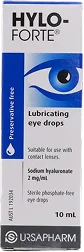
| Hylo-Forte | Sodium hyaluronate 0.2% | Aqueous-deficient / mixed | Preservative-free (COMOD) | Moderate–severe lubrication, long residence |
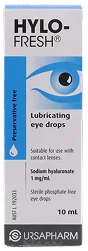
| Hylo-Fresh | Sodium hyaluronate 0.1% | Aqueous-deficient | Preservative-free (COMOD) | Mild dryness, screen fatigue |
| Hylo-Dual (coming soon) | Sodium hyaluronate + ectoine | Mixed + allergic/inflammatory | Preservative-free (COMOD) | Dryness with an allergic or inflammatory surface |
| Avizor Lacrifresh Moisture | Sodium hyaluronate 0.15% | Aqueous-deficient | Preservative-free | Contact-lens-compatible lubrication |
| Systane Hydration UD | Sodium hyaluronate + hydroxypropyl guar + PEG/propylene glycol | Aqueous-deficient / mixed | Preservative-free (unit dose) | Dual-polymer lubrication, post-surgical |
| Systane Ultra | PEG-400 0.4% + propylene glycol 0.3% + hydroxypropyl guar | Aqueous-deficient | Unit dose PF / multidose preserved | Fast-acting environmental relief |
| Systane Complete PF | Propylene glycol 0.6% + hydroxypropyl guar + nano mineral-oil droplets | Mixed (aqueous + evaporative) | Preservative-free | All-subtype “all-in-one” drop |
| Polytears (coming soon) | Dextran 70 0.1% + hypromellose 0.3% | Aqueous-deficient | Preserved (multidose) | Familiar, economical everyday tear |
| TheraTears Drops | Carmellose (CMC) 0.25%, hypotonic, electrolyte-balanced | Aqueous-deficient + hyperosmolar | Unit dose PF / perborate | Counters tear hyperosmolarity |
| OCuSOFT Retaine CMC | Carmellose + cationic oil-in-water nano-emulsion (light mineral oil) | Mixed / MGD | Preservative-free | Restores aqueous and lipid together |
| Systane Balance | Propylene glycol 0.6% + mineral oil + anionic phospholipid (LipiTech) + HP-guar | Evaporative / MGD | Preserved (Polyquad) | Restores the lipid layer in MGD |
| NovaTears | Perfluorohexyloctane (F6H8) 100%, water-free | Evaporative / MGD | Preservative-free | Spreads a thin anti-evaporative film |
| Rohto Dry Aid | Lipid-restoring TearShield technology (HP-guar + TPGS vitamin-E derivative) | Evaporative / mixed | Preserved (multidose) | Non-blurring evaporative relief |
| Systane Gel Drops | PEG-400 + propylene glycol + hydroxypropyl guar (high viscosity) | Aqueous-deficient / severe | Preserved | Long-lasting / bridging to night |
| TheraTears Gel | Carmellose (CMC) 1%, hypotonic electrolyte | Aqueous-deficient / severe | Unit dose PF | Moderate–severe, night-time |
| Viscotears Liquid Gel | Carbomer 980 (polyacrylic acid) 0.2% | Evaporative / aqueous | Preserved (cetrimide) | High-retention gel for daytime |
| Viscotears Gel PF (coming soon) | Carbomer 980 0.2% | Evaporative / aqueous | Preservative-free (unit dose) | Same gel for preservative-sensitive eyes |
| Poly Visc (coming soon) | Paraffin-based ointment (white soft & liquid paraffin, wool fat) | Evaporative / exposure | Preserved | Night-time protective ointment |
| Vita-POS (coming soon) | Retinol palmitate (vitamin A) in paraffin base | Evaporative / exposure | Preservative-free | Night ointment for exposure / lagophthalmos |
| Optimel Manuka Eye Drops | Standardised antibacterial Leptospermum (manuka) honey ~16% | Evaporative / MGD + anterior blepharitis | Preservative-free | Antibacterial and osmotic lid-margin support |
| Optimel Manuka Forte Gel | Standardised Leptospermum honey ~98% (gel) | MGD / blepharitis | Preservative-free | Higher-strength night application |
| AEON NaCl 5% (coming soon) | Hypertonic sodium chloride 5% | Adjunct — corneal oedema | Preservative-free | Osmotic corneal deturgescence (not a comfort drop) |
| Cromo-Fresh (coming soon) | Sodium cromoglycate 2% (mast-cell stabiliser) | Adjunct — allergic surface | Preservative-free | Allergic conjunctivitis overlapping DED |
Aqueous replacement: hyaluronic acid
Hyaluronic acid (HA, sodium hyaluronate) is the most important single molecule in the modern dry eye formulary. It is a naturally occurring glycosaminoglycan with strong water-binding and non-Newtonian, shear-thinning behaviour — it is viscous and protective when the eye is still, then thins on the blink so it does not blur vision. DEWS III notes a systematic review of 18 studies showing HA-containing supplements are superior to non-HA supplements for ocular staining and patient-reported symptoms. The Hylo family (Hylo-Fresh 0.1%, Hylo-Forte 0.2%) and Avizor Lacrifresh (0.15%) are graded by HA concentration, so severity of aqueous deficiency guides the choice. All are preservative-free, with the Hylo COMOD multidose valve delivering over 300 preservative-free drops from one bottle.
Guar and PEG demulcent polymers
Hydroxypropyl guar (HP-guar) is a high-molecular-weight polymer that gels in situ on contact with the ocular surface pH, forming a hydrated protective scaffold. DEWS III highlights the dual-polymer strategy — HP-guar combined with HA and/or PEG/propylene glycol — as significantly enhancing tear film stability, break-up time and retention over single-ingredient drops, and as improving goblet cell density and epithelial repair. This is the chemistry behind the Systane platform (Ultra, Hydration, Complete, Gel), which pairs HP-guar with PEG-400 and propylene glycol demulcents. Systane Complete adds nano-sized mineral-oil droplets so it addresses both aqueous and evaporative components in one drop. Polytears represents the older dextran-70 plus hypromellose (HPMC) demulcent chemistry — familiar and economical, though preserved.
Cellulose polymers and cationic emulsions
Carmellose (carboxymethylcellulose, CMC) is a long-established demulcent. The TheraTears formulations are distinctive for being hypotonic and electrolyte-balanced, deliberately delivering a low-osmolarity tear to counteract the hyperosmolarity that drives the DED vicious circle — DEWS III specifically discusses hypo-osmotic agents in this role. OCuSOFT Retaine CMC pairs CMC with a cationic oil-in-water nano-emulsion: the positively charged droplets are attracted to the negatively charged, damaged ocular surface, prolonging residence and restoring both aqueous and lipid phases, which makes it useful in mixed disease and MGD.
Lipid-based and water-free formulations for evaporative dry eye
Where the problem is evaporation, replacing water is not enough — the lipid layer must be restored. DEWS III reviews lipid-containing supplements (mineral oil, castor oil, phospholipids) and reports they outperform non-lipid drops in evaporative and mixed DED, improving lid-wiper epitheliopathy and lipid layer thickness. Systane Balance uses an anionic-phospholipid and mineral-oil system (LipiTech) built specifically for MGD. The most mechanistically novel entry is NovaTears (perfluorohexyloctane, F6H8) — a completely water-free, preservative-free semifluorinated alkane that spreads as an ultrathin film to physically slow evaporation. DEWS III devotes a full section to perfluorohexyloctane, citing Phase III trials showing significant improvement in evaporative DED signs and symptoms with a good safety profile.
Osmoprotectants and bioactive agents
Osmoprotectants let surface cells tolerate osmotic stress. DEWS III reviews ectoine (a bacteria-derived extremolyte that protects membranes and reduces symptoms and inflammatory markers) and trehalose (a disaccharide that stabilises proteins and enhances autophagy). Hylo-Dual brings ectoine alongside HA, targeting the dry and inflamed or allergic surface. The Optimel range uses standardised antibacterial Leptospermum (manuka) honey, which is simultaneously osmotic and antibacterial — useful at the lid margin in evaporative disease with anterior blepharitis, an application area where NZERC has particular clinical interest.
Gels and night-time ointments
Viscosity buys contact time at the cost of transient blur, so the heavier agents are positioned for severe disease and overnight use. Carbomer (polyacrylic acid) gels — Viscotears Liquid Gel, and its preservative-free unit-dose form — sit between a drop and an ointment. For the night, paraffin-based ointments (Poly Visc) and the preservative-free vitamin-A ointment Vita-POS protect the surface through the hours of reduced blinking and are especially valuable in exposure and lagophthalmos.
Specialist adjuncts
Two listed products sit deliberately outside the comfort-drop category and are included for completeness. AEON hypertonic sodium chloride 5% is an osmotic agent used to draw fluid out of an oedematous cornea (for example in Fuchs dystrophy or post-surgical oedema) — it is a treatment, not a lubricant. Cromo-Fresh (sodium cromoglycate) is a mast-cell stabiliser for allergic conjunctivitis, which frequently overlaps with, and aggravates, dry eye. Finally, the oral supplement Lacritec (omega-3 EPA/DHA with omega-6 GLA) reflects the DEWS III evidence base for essential fatty acids in MGD and evaporative disease, acting systemically rather than topically.
Preservatives and delivery
DEWS III is unambiguous that preservatives — particularly benzalkonium chloride — can produce toxic and pro-inflammatory effects on the ocular surface and exacerbate dry eye with chronic use, and that the field has moved decisively toward preservative-free unit-dose and multidose valve systems. This is why the formulary above is weighted toward preservative-free options for any patient dosing more than a few times a day, or with moderate-to-severe or inflammatory disease. Delivery matters too: bottle squeezability and dexterity affect real-world compliance, which is why drop aids sit alongside the drops themselves in a complete dry eye service.
From formulary to research: the NZERC position
A formulary this granular is not a retail exercise — it is the infrastructure of a research-capable dry eye practice. Matching a defined chemistry to a DEWS III subtype, dosing it under a preservative-conscious protocol, and measuring the response with standardised signs and symptoms is precisely the workflow that industry-sponsored and investigator-led clinical trials require of a site. The New Zealand Eye Research Centre (NZERC) maintains this breadth of tear-supplement and device therapy specifically so that it can serve as a credible New Zealand trial site for dry eye and ocular surface research. Research organisations, device manufacturers and pharmaceutical sponsors evaluating a New Zealand site for dry eye, MGD or ocular surface studies are invited to partner with NZERC. For clinicians and practices, the team at Rose Optometry is available for support and advice on complex ocular surface and contact lens cases.
References
- Jones L, Craig JP, Markoulli M, et al. TFOS DEWS III: Management and Therapy. American Journal of Ophthalmology. 2025;279:289-386.
- Craig JP, Nichols KK, Akpek EK, et al. TFOS DEWS II Definition and Classification Report. The Ocular Surface. 2017;15(3):276-283.
- Willcox MDP, Argueso P, Georgiev GA, et al. TFOS DEWS II Tear Film Report. The Ocular Surface. 2017;15(3):366-403.
- Nelson JD, Craig JP, Akpek EK, et al. TFOS DEWS II Introduction. The Ocular Surface. 2017;15(3):269-275.
- Nichols KK, Foulks GN, Bron AJ, et al. The International Workshop on Meibomian Gland Dysfunction: Executive Summary. Investigative Ophthalmology & Visual Science. 2011;52(4):1922-1929.
.svg)

