A VR headset for myopia? Reading a 6-month trial with appropriate scepticism
Jagrut Lallu — BOptom (Hons), MSc Specialty Lenses (Hons), FIAOMC. Therapeutic Optometrist & Contact Lens Specialist. Founder, New Zealand Eye Research Centre; Partner, Rose Optometry; WCO Asia-Pacific Myopia Ambassador; International Myopia Institute NZ Ambassador; Clinical Senior Lecturer, Deakin School of Optometry; Honorary Teaching Fellow, University of Auckland.
Could 15 minutes a day in a virtual reality (VR) headset help slow myopia? A randomised clinical trial from China, published in JAMA Ophthalmology in 2026, reports that home-based "digital defocus vision training" (DDVT) delivered through a head-mounted VR device was associated with less eye growth over six months than single-vision spectacles alone.
A note on our source: this article is based on the published abstract and key points; we were not able to review the full paper, which is currently under a publisher embargo. Several important methodological details are therefore unknown.
What the trial did
The study was a single-centre, two-arm randomised clinical trial carried out in Guangzhou, China. In total, 120 children aged 6 to 12 years with myopia were randomised, 60 to DDVT plus single-vision spectacles and 60 to single-vision spectacles alone. Of these, 116 completed the trial and were analysed (57 DDVT, 59 spectacles only). Enrolment took place in July 2024 and the primary outcome was measured at six months.
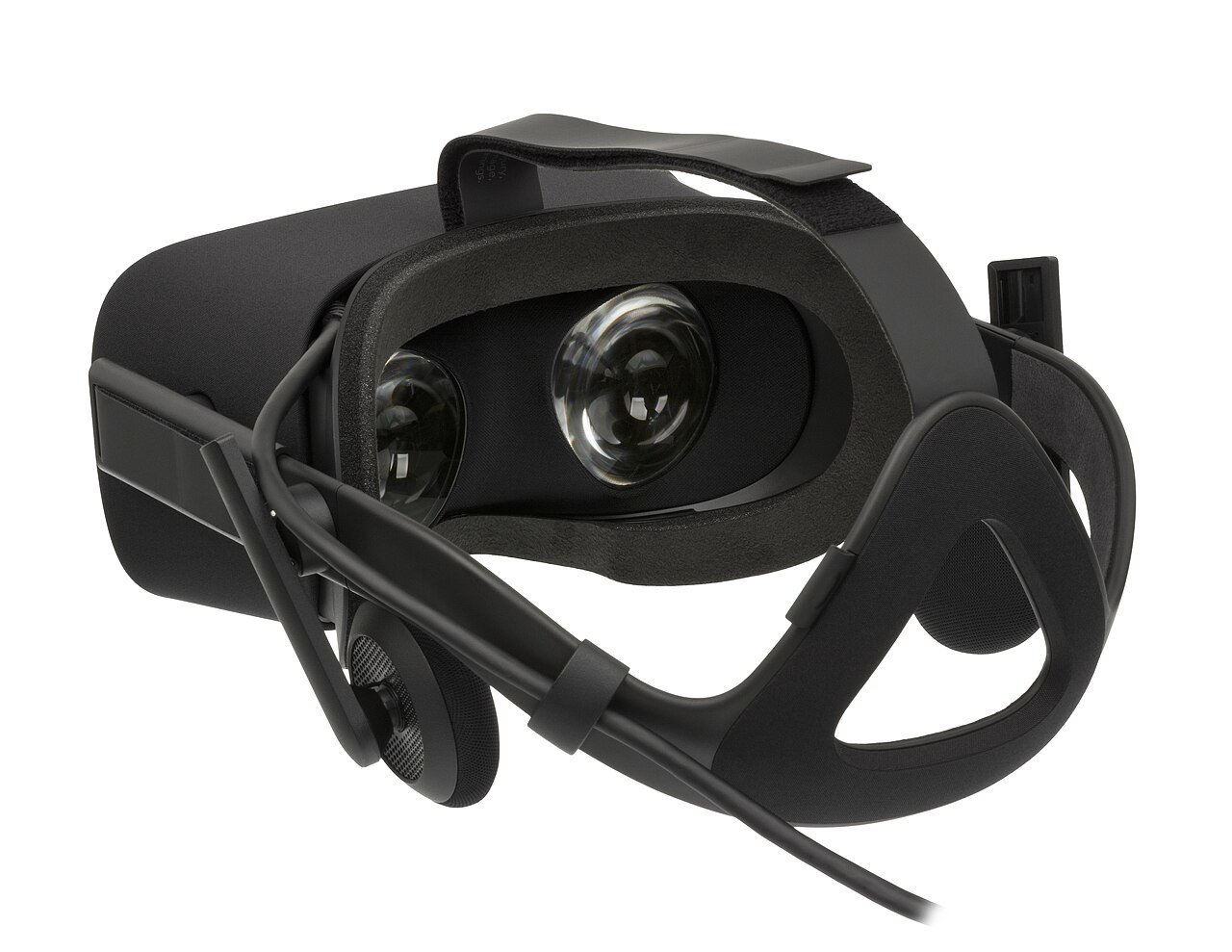
Children in the DDVT group used the headset for 15 minutes a day at home, under parental supervision, after an initial training session in hospital. The abstract does not describe what the training involves optically, such as the amount of defocus, the image content or the visual tasks, nor does it name the device manufacturer. The control group received no device and no sham, and the authors themselves describe the trial as "unmasked" and "small".
At baseline the groups were similar: mean age 9.42 versus 9.31 years, axial length 24.35 versus 24.40 mm, and spherical equivalent refraction −1.91 versus −2.04 D.
The between-group results at six months
The primary outcome was change in axial length, the physical length of the eye. Over six months, axial length increased by 0.15 mm with DDVT and 0.25 mm with spectacles alone. The reported difference was 0.11 mm (95% CI, 0.07 to 0.15 mm; P < .001). Subtracting the rounded group means gives 0.10 mm; the small mismatch is probably due to rounding or statistical adjustment, but the abstract does not say.
Refraction changed by −0.23 D with DDVT and −0.46 D with spectacles alone, reported as a difference of −0.23 D (95% CI, −0.35 to −0.11 D; P = .003). Visual acuity changed by −0.02 logMAR with DDVT and 0.01 logMAR with spectacles alone, a difference of 0.03 logMAR (95% CI, 0.02 to 0.05; P < .001). The abstract reports that no training-related adverse events were observed.
What do these statistics mean? A 95% confidence interval (CI) is the range of true effects that are reasonably compatible with the data. Here the interval for axial length runs from 0.07 to 0.15 mm, so the data suggest a real but modest difference. A P value tells us how surprising a result this large would be if the headset had no effect at all. A small P value makes chance unlikely, but says nothing about whether the effect matters or whether bias explains it.
Reading it with appropriate scepticism
The absolute effect is small and short-term. A 0.11 mm difference over six months is an early signal, not evidence of lasting benefit. Many myopia-control treatments look larger in the first months than at one or two years, and six months cannot tell us about durability, seasonal effects or any rebound after stopping.
No sham, no masking. Families knew whether their child had a headset, and the comparison group had nothing new to do. That opens the door to behaviour changes, such as altered screen time, near work or outdoor time, and to expectation effects. Axial length is an objective measurement and less prone to bias than refraction or visual acuity, but we do not know whether the people measuring it were masked, or whether refraction was measured with cycloplegia.
The visual acuity result needs context. The 0.03 logMAR difference was statistically significant, but it is less than one line on a letter chart and within the usual test-retest variability of acuity testing.
The authors are appropriately cautious. They state that the clinical relevance of the differences over the short and long term "cannot be determined from this trial".
This pattern is familiar from other novel devices. Our review of the Australian red-light therapy pilot trial looks at another novel device at a similarly early stage of evidence.
Limitations of this evidence
- Abstract only. We could not check randomisation and allocation concealment, sample-size calculation, assessor masking, cycloplegia, the statistical model, eye-level versus child-level analysis, or how missing data were handled.
- Small, single-centre and short. 120 children at one centre in one country, followed for six months to the primary outcome. Generalisability to other populations, including New Zealand children, is uncertain.
- Unmasked with no sham control. Performance and expectation effects cannot be excluded.
- Adherence unknown. A 15-minute daily home routine depends on compliance, and the abstract gives no adherence data or whether the device logged use.
- Follow-up timing unclear. Follow-up was completed in September 2025, well beyond six months after July 2024 enrolment; whether longer-term outcomes were collected is not stated.
- Surrogate outcomes. Axial length and refraction are proxies for the outcomes that matter most, such as high myopia and myopia-related eye disease.
- Possible industry involvement. Funding was from public Chinese research grants and no conflicts of interest were reported, but the acknowledgements thank a technology company for "technological support of this trial". The nature of that support is not described in the available text.
- Safety reporting. How adverse events were collected, and whether VR-specific symptoms such as eye strain, headache or motion sickness were assessed, is not reported in the abstract.
What this means for families in Hamilton
VR-based training is an interesting research direction, but on current evidence it remains experimental. This trial does not show that a headset can replace established, better-studied options such as those compared in the two-year DIMS lens versus 0.01% atropine trial, and it should not be taken as a reason to buy a consumer VR device for a child.
If you are concerned about your child's myopia, a professional assessment is a sensible starting point. Our optometrists, including Jagrut Lallu and Jacqueline Rowe, provide myopia control at Rose Optometry in Hamilton. If you would like to talk through new research like this first, book a free Myopia Chat with Jagrut.
References
- Zhong J, et al. Digital Defocus Vision Training Using Virtual Reality for Myopia Control: A Randomized Clinical Trial. JAMA Ophthalmology. 2026;144(10):908-914. PMID: 42658516. DOI: 10.1001/jamaophthalmol.2026.3490